Skip to content

Hip Fractures in Nursing Homes: What They Are, Why They Happen, and What the Law Says

National · laws differ by state · Updated November 11, 2026

Information only — not legal or medical advice

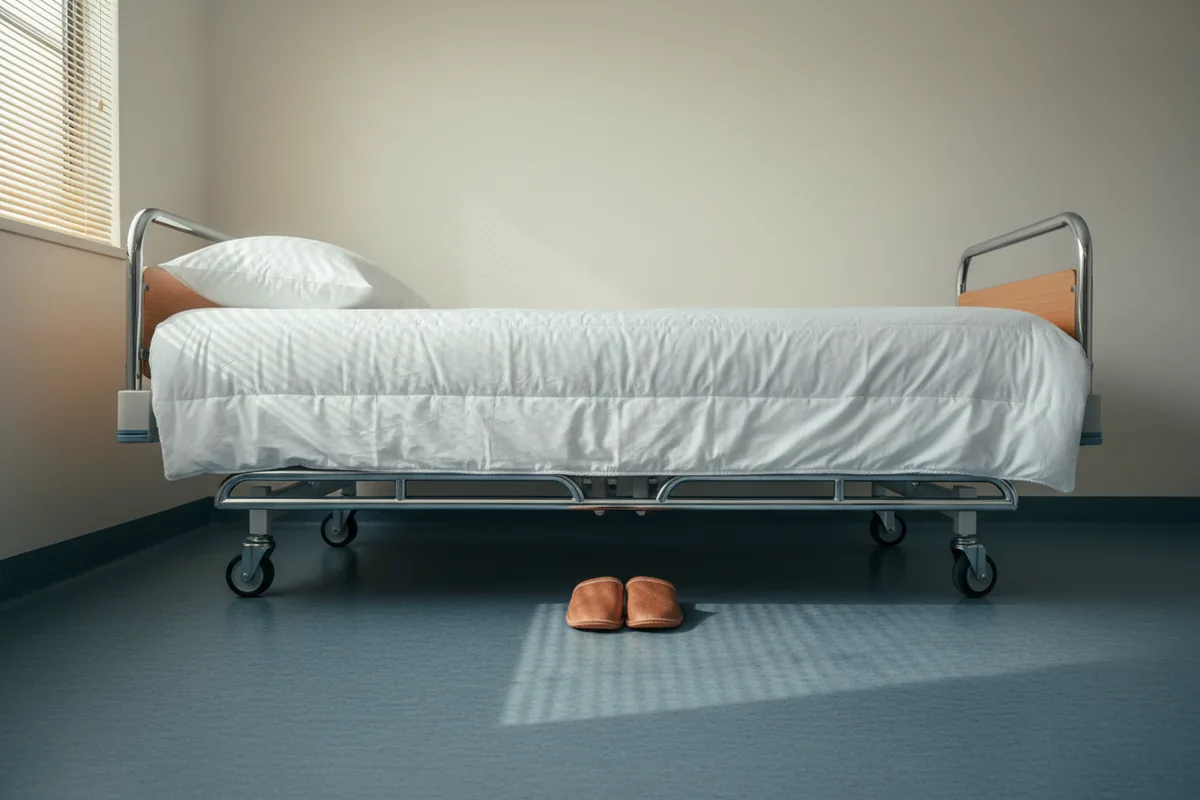
An empty nursing home resident's bed with non-slip slippers on the floor beside it.
Immediate answer

A nursing home hip fracture is serious, but it does not prove fault on its own. Here is what 42 C.F.R. § 483.25(d) and § 483.12(c) require of facilities.

On this page
  1. Why a Broken Hip Can Change So Much for an Older Resident
  2. How Falls Lead to Hip Fractures in Nursing Home Residents
  3. What the Nursing Home Was Expected to Do Before the Fall
  4. When No One Can Explain How the Hip Broke
  5. How the Law Asks Whether the Facility Fell Short
  6. What Families Often Weigh After a Nursing Home Hip Fracture
  7. Frequently asked questions
  8. Sources

A hip fracture is a broken bone at the hip joint, and in nursing home residents it most often follows a fall. Federal rules require a nursing home to keep its environment as free of accident hazards as possible and to give each resident adequate supervision and assistance devices. A fracture alone does not prove the facility failed. The facts decide that.

Most people facing this question got a phone call they did not expect: a parent or spouse was found on the floor, taken to the hospital, and diagnosed with a broken hip. The staff's account may be thin, or there may be no account at all. If you are in that position, you are probably trying to understand how serious the injury is, how it happened, and whether the nursing home did what it was supposed to do.

This page explains why a hip fracture is especially serious for older adults, what federal regulations ask of nursing homes, what an "injury of unknown source" means, and how the law looks at whether a fracture reflects a failure of care.

Why a Broken Hip Can Change So Much for an Older Resident

If you are wondering why doctors and staff are treating this injury so seriously, the answer starts with the joint itself. MedlinePlus, the National Library of Medicine's health information service, describes the hip as a ball-and-socket joint: a ball at the end of the femur (thigh bone) fits into a socket in the pelvis (hip bone). MedlinePlus notes that when hips are healthy, it takes great force to hurt them.

A hip fracture is a break in the bones of that joint. On its page about hip injuries and disorders, MedlinePlus lists falling among the things that can lead to hip injuries, with fractures (broken bones) among those injuries, alongside strains, bursitis and dislocations.

Age changes the picture. MedlinePlus explains that osteoporosis of the hip causes weak bones that break easily, and that osteoporosis and osteoarthritis are both common in older people. Its page on falls states that older adults are at higher risk of falling and more likely to fracture a bone when they fall, especially if they have osteoporosis. The same page states that a broken bone, especially in a hip, may even lead to disability and a loss of independence for older adults.

For a family, that last sentence is often the heart of the worry. A resident who walked to meals last month may now depend on others for much more. MedlinePlus lists rest, medicines, physical therapy and surgery, including hip replacement, among the treatments for hip disorders. What any one person's recovery looks like is a medical question for the resident's own treating care team, and this page does not try to answer it.

How Falls Lead to Hip Fractures in Nursing Home Residents

MedlinePlus lists common causes of falls, including balance problems; some medicines, which can make a person feel dizzy, confused or slow; vision problems; muscle weakness, especially in the legs, which can make it harder to get up from a chair or keep balance; certain illnesses, such as low blood pressure, diabetes and neuropathy; slow reflexes; and tripping or slipping from a loss of footing or traction.

Many of those factors describe the people who live in nursing homes. A resident may take several medicines, may have weak legs after an illness, or may have trouble seeing at night. A facility that cares for residents with these conditions is caring for people whose falls are more likely and more dangerous, which is why supervision matters so much in this setting.

Those same facts cut the other way too. Some falls happen even with careful planning and attentive staff; others happen because a known risk was not addressed. If you are trying to tell which kind of fall this was, the questions that usually matter are what the facility knew about this resident's risks, what its own plan called for, and what staff actually did in the hours and days before the fall.

Clinical uncertainty can also come in. Weak bones can break with little force, and the record may not show whether the fall caused the break or the break came first. Medical records and medical opinion answer questions like that. Fall prevention and supervision more broadly are covered on this site's page about nursing home fall injuries.

What the Nursing Home Was Expected to Do Before the Fall

Federal law sets a baseline. The rules in 42 C.F.R. Part 483 apply to nursing homes that take part in Medicare and Medicaid, and this site's page on federal nursing home regulations explains that framework in more detail. Two provisions matter most after a hip fracture.

The first is the accident rule. Under 42 C.F.R. § 483.25(d), "The facility must ensure that— (1) The resident environment remains as free of accident hazards as is possible; and (2) Each resident receives adequate supervision and assistance devices to prevent accidents."

That provision sits inside the regulation's broader quality-of-care rule, which says that, based on the comprehensive assessment of a resident, the facility must ensure residents receive treatment and care in accordance with professional standards of practice, the comprehensive person-centered care plan and the resident's choices. Read together, the duty is individual. What counts as "adequate supervision" for a resident who walks steadily is different from what it means for a resident with weak legs and a history of falls. For a family, that means the resident's own assessment and care plan are usually the starting point for understanding what the facility had committed to do.

The second provision is the reporting rule in 42 C.F.R. § 483.12(c), which covers alleged violations involving abuse, neglect, exploitation or mistreatment, and expressly includes injuries of unknown source. The next section explains what it requires.

These are federal minimums. Section 483.12(c) itself refers to reporting "in accordance with State law," and states may set their own licensing and care requirements on top of the federal floor. A family trying to understand what a particular facility owed a resident is often looking at both layers, and sorting out which layer applies is one of the things a conversation with an attorney can help with.

When No One Can Explain How the Hip Broke

Sometimes a resident is found in pain, or an X-ray shows a fracture, and no fall was seen or charted. Federal rules use the phrase injury of unknown source for situations like this, and they treat it seriously.

Under 42 C.F.R. § 483.12(c), in response to allegations of abuse, neglect, exploitation or mistreatment, the facility must ensure that all alleged violations, "including injuries of unknown source," are reported to the administrator and to other officials, including the State Survey Agency and adult protective services where state law gives them jurisdiction over long-term care facilities, in accordance with state law. The timing is set by the rule: immediately, but not later than 2 hours after the allegation is made, if the events involve abuse or result in serious bodily injury, or not later than 24 hours if they do not involve abuse and do not result in serious bodily injury.

The rule does not stop at the report. The facility must have evidence that all alleged violations are thoroughly investigated, must prevent further potential abuse, neglect, exploitation or mistreatment while the investigation is in progress, and must report the results to the administrator or a designated representative and to other officials under state law, including the State Survey Agency, within 5 working days of the incident. If the alleged violation is verified, appropriate corrective action must be taken.

This matters most when the resident cannot explain what happened, for example because of confusion or memory loss. An unexplained fracture raises real questions about supervision and record-keeping, but the label "unknown source" describes a gap in the account, not a finding. What fills that gap is what the records and witnesses show.

If you are looking at an unexplained fracture, the records that usually matter include the facility's incident report, the resident's care plan and fall-risk assessments, nursing notes from the shifts before and after, and any report or investigation the facility made under this rule. A conversation with our attorney can help you understand what those documents say and what they leave unanswered; you can request a case evaluation when you are ready.

How the Law Asks Whether the Facility Fell Short

Most claims about a nursing home injury are built on negligence, which in plain terms means a failure to use the care that a reasonable person or business would use in the same situation. If you are trying to understand whether a fracture might support a claim, the law asks four questions, and each one has to be answered from the facts.

The first is duty: did the facility owe the resident reasonable care? A nursing home owes that duty to its residents, so this is rarely where the question turns. The second is breach: did the facility fall short of that standard? Breach, for example, might mean the facility's own care plan called for an assistance device and staff did not use one. The third is causation: did that shortfall actually cause the injury, rather than something else, such as a fracture that would have happened anyway? The fourth is damages: what losses did the injury cause?

Federal regulations help define the duty. A requirement like 42 C.F.R. § 483.25(d), with its focus on hazards, adequate supervision and assistance devices, describes one measure of what a facility was expected to do. Professional standards of practice, the resident's own care plan and state law also bear on what reasonable care meant for this resident. This site's page on nursing home neglect explains how neglect is defined.

This is why the fracture by itself cannot answer the question: the injury speaks only to damages. Whether there was a breach can depend on whether the fall risk was identified, whether the care plan addressed it, and whether staff followed that plan. Causation can depend on medical evidence about bone strength and how the fracture happened.

State law governs most nursing home negligence claims, and the rules differ from state to state. That includes the limitation period, which is the deadline for filing a lawsuit, along with when it starts to run and what exceptions apply; the rules for how fault is shared; and the rules on what damages may be recovered. No one state's rule applies everywhere, and the outcome of any matter is not assured.

What Families Often Weigh After a Nursing Home Hip Fracture

The first question for many families is simply what happened. They want to know where the resident was, who was nearby, when the injury was noticed, and how quickly the resident was sent for care. The next questions are often about the plan: whether the facility knew this person was likely to fall, and what it had committed to do about it.

The records that typically answer those questions include hospital and medical records, the facility's incident reports, the care plan and any updates to it, nursing notes, fall-risk assessments and, for the facility as a whole, its inspection records. Families also often think about whether the facility's response after the fall was adequate, including whether it reported and investigated the injury as the federal rules require. You can also learn about how to get nursing home medical records on this site.

Some families are also deciding whether the resident should stay in the same facility. That is a personal choice shaped by the resident's needs, their wishes and the options available, and it often happens at the same time as the questions about what went wrong.

When the law allows recovery, damages are the categories of loss it recognizes. Depending on the state, those can include medical expenses and pain and suffering, and where an injury leads to a death, wrongful death damages, which are losses the law allows certain family members to claim after a death caused by someone else's wrongful conduct. This site's page on nursing home wrongful death explains how those claims work. Damages rules differ by state, and what any situation might involve depends on its facts and the law that applies.

Free case evaluation

No Fee Unless We Win Your Case

A free case evaluation is how it starts. Tell us what happened, and we’ll help you understand your options. You pay no fee unless we win your case.

Nursing Home Abuse Advocates

How it works

  1. Call us or request a free case evaluationTell us what happened, in your own words.
  2. Talk through your caseYour options, and what your case may be worth.
  3. No fee unless we winYou pay no attorney fee unless we win your case.
Free case evaluation

Tell Us What Happened

Frequently asked questions

What causes hip fractures in nursing home residents?

Falls are a common cause. MedlinePlus lists falling among the things that can lead to hip injuries such as fractures, and states that older adults are more likely to break a bone when they fall, especially with osteoporosis. Balance problems, some medicines, vision problems and muscle weakness are among the causes of falls MedlinePlus names.

Are nursing homes required to prevent falls?

Under 42 C.F.R. § 483.25(d), a facility is expected to keep the resident environment as free of accident hazards as possible and to give each resident adequate supervision and assistance devices to prevent accidents. For a family, the question is usually whether the facility did that for this particular resident, which depends on the facts. States may add their own requirements.

What happens if a nursing home resident has an injury and no one knows how it happened?

Under 42 C.F.R. § 483.12(c), an injury of unknown source must be reported to the administrator and other officials within 2 hours if it involves abuse or serious bodily injury, otherwise within 24 hours, then investigated, with results reported within 5 working days. An unexplained injury raises questions but does not by itself establish fault.

Does a hip fracture in a nursing home mean the facility was negligent?

Not automatically. A negligence claim requires duty, breach, causation and damages. Whether those are met depends on the facts, including what the facility knew about the resident's fall risk, what its care plan called for and what staff actually did.

What is the legal standard of care for nursing homes?

Nursing homes owe residents a duty of reasonable care. Federal rules, including 42 C.F.R. § 483.25(d), describe one measure of that duty, alongside professional standards of practice and the resident's care plan. State law also sets standards, and those differ by state.

How long does a family have to bring a claim after a nursing home hip fracture?

State law sets the limitation period, the deadline for filing a lawsuit, and it differs from state to state, including when it starts to run and what exceptions apply. A conversation with an attorney can help a family understand which deadline governs their situation.

What records are typically relevant after a nursing home hip fracture?

Medical records, incident reports, the resident's care plan, nursing notes, fall-risk assessments and facility inspection records are among the records that typically show what happened and what the facility knew. Any report and investigation under the federal reporting rule can also matter.

What is the prognosis for an elderly person after a hip fracture?

MedlinePlus states that a broken bone, especially in a hip, may lead to disability and a loss of independence for older adults. Each person's outcome depends on their health and circumstances, and those medical questions belong with the resident's treating care team.

Sources

Statutes, regulations and court sources

  1. 0142 C.F.R. § 483.25 — Quality of care (eCFR) · Electronic Code of Federal Regulations
  2. 0242 C.F.R. § 483.12 — Freedom from abuse, neglect, and exploitation (eCFR) · Electronic Code of Federal Regulations

Other sources

  1. 03Falls (MedlinePlus, U.S. National Library of Medicine) · medlineplus.gov
  2. 04Hip Injuries and Disorders (MedlinePlus, U.S. National Library of Medicine) · medlineplus.gov