
Skip to content

Medication Errors in Nursing Homes: What the Law Requires and What Families Face

National · laws differ by state · Updated November 10, 2026

Information only — not legal or medical advice

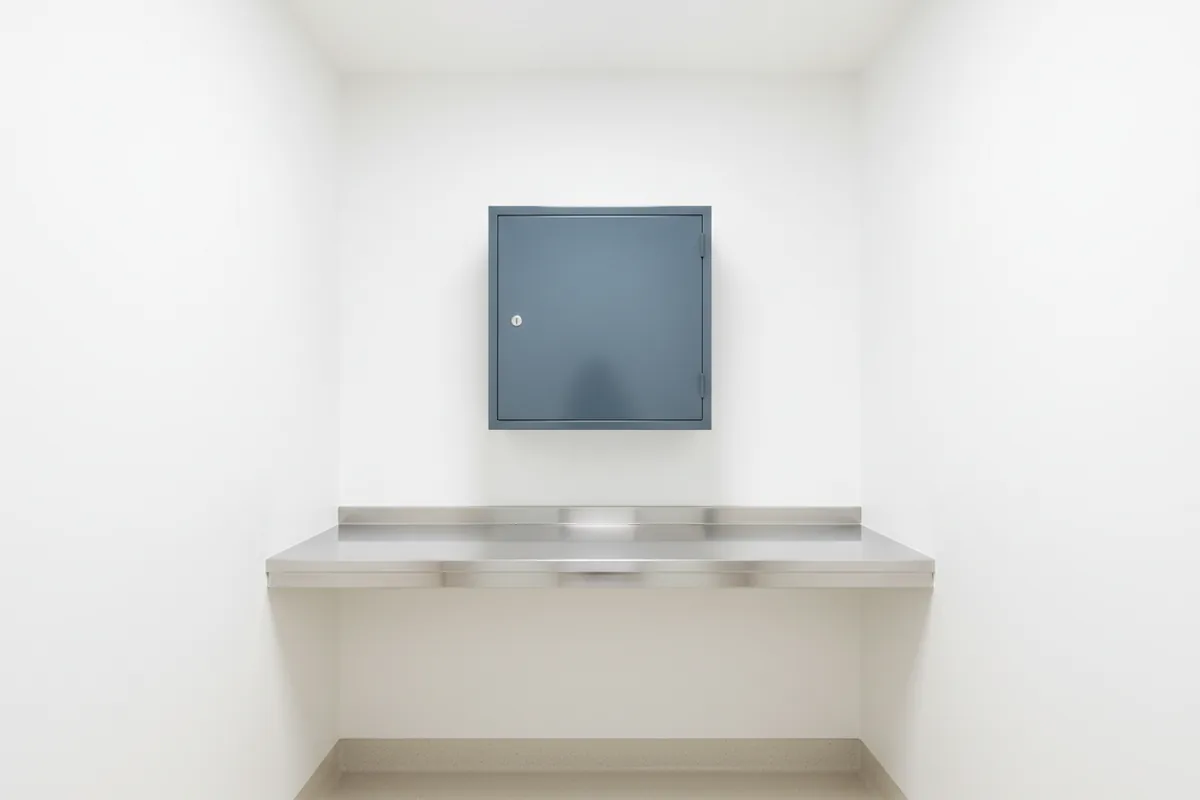
A locked medication cabinet on a plain wall in a nursing home dispensing room.
Immediate answer

Federal rules require nursing homes to keep medication error rates below 5 percent and residents free of significant errors. What that means and how state law applies.

On this page
  1. Was It a Medication Error? What Federal Regulations Require
  2. What Kind of Mistake Happened? Types of Medication Errors in Nursing Facilities
  3. Why Medication Errors Happen in Long-Term Care Settings
  4. What the Facility's Duty of Care Looks Like Under the Law
  5. What Families Often Gather After a Medication Error
  6. How Fault and Damages Work Differently Across States
  7. Frequently asked questions
  8. Sources

If a nursing home gave your relative the wrong drug, the wrong dose or skipped doses, federal rules apply. A facility must ensure its medication error rates are not 5 percent or greater and that residents are free of any significant medication errors. Whether a particular error leads to legal responsibility depends on the facts and on state law.

Most people facing this question have just learned that something went wrong with a parent's or spouse's medicine. Perhaps a pill meant for another resident, a dose doubled, or days of a needed drug never given. They are often watching a loved one become confused, drowsy or sick, and they are trying to understand whether the nursing home had a duty to prevent it and what the law says when it did not.

This page explains what a medication error is, what the federal nursing home rules require, why errors happen in long-term care, which records tend to matter, and how state law shapes any claim.

Was It a Medication Error? What Federal Regulations Require

If your relative was given a drug, a dose or a schedule that did not match what was intended, that is what the law calls a medication error: a mistake in prescribing, dispensing or giving a drug. It can be the wrong drug, the wrong dose, a missed dose, the wrong route (for example, by mouth instead of by injection), or the wrong timing. MedlinePlus, the federal health information service of the National Library of Medicine, notes that errors can happen in the hospital, at the health care provider's office, at the pharmacy, or at home. In a nursing home, many older adults receive every dose from someone else's hands. That is why the federal rules place the duty on the facility.

The pharmacy services rule for nursing homes, 42 C.F.R. § 483.45, says the facility must provide routine and emergency drugs and biologicals to its residents. Its medication-error paragraph, 42 C.F.R. § 483.45(f), states that the facility must ensure that its "(1) Medication error rates are not 5 percent or greater; and (2) Residents are free of any significant medication errors."

Those two parts work together. The 5 percent figure is a regulatory threshold, not a statistic about how often errors happen. The second part stands on its own: one significant error can fall short of the rule even when the overall rate is low. For a family, this means a facility's general record does not settle what happened to one resident.

A separate paragraph, 42 C.F.R. § 483.45(d), states that "Each resident's drug regimen must be free from unnecessary drugs."

These are binding federal requirements, not best practices. They are part of the wider body of federal nursing home regulations that set the minimum standard of care. The question for a family becomes whether what happened to their relative fell below that minimum. A conversation with an attorney can help connect the event to the rule it may touch.

What Kind of Mistake Happened? Types of Medication Errors in Nursing Facilities

Families usually notice a medication problem through its result: a sudden fall, a change in alertness, a return of symptoms a drug was meant to control. Behind that result, the mistake usually fits one of a handful of categories:

  • The wrong drug was given, either a different medicine from the one ordered or one never ordered at all.
  • The wrong dose was given, meaning too much or too little.
  • A dose was missed or skipped.
  • The drug went by the wrong route.
  • The medicine went to the wrong resident.
  • An order was copied or passed along incorrectly, a transcription or communication error, so the drug given never matched what the prescriber intended.

A second kind of problem has its own name in the federal rules. Under 42 C.F.R. § 483.45(d), an unnecessary drug is any drug when used in excessive dose (including duplicate drug therapy), for excessive duration, without adequate monitoring, without adequate indications for its use, or in the presence of adverse consequences which indicate the dose should be reduced or discontinued, or any combination of those reasons. A drug can be given exactly as ordered and still be unnecessary under this definition. A separate paragraph of the same regulation, 42 C.F.R. § 483.45(e), sets limits on psychotropic drugs, a subject the site covers alongside chemical restraints.

The category matters because it points to different records and different parts of the facility's duty. A missed dose shows up, or fails to show up, on the medication administration record (the MAR), the chart where staff record each dose given. A wrong-dose error may lead back to the physician's order. A transcription error may sit between the two. If you are trying to learn what happened to your relative, naming the likely category can narrow which records to look at first and which part of the federal rule may be involved.

This page describes these categories only as regulatory and factual groupings. Questions about a resident's health or treatment belong with the resident's care providers.

Why Medication Errors Happen in Long-Term Care Settings

A family's next question is usually how this could happen in a place that gives out medicine all day. The answer often involves several parts of the facility, not one person.

The federal rule itself shows how many hands are involved. Under 42 C.F.R. § 483.45, the facility may permit unlicensed personnel to administer drugs if State law permits, but only under the general supervision of a licensed nurse. Who gave the dose, what training that person had, and how closely a licensed nurse supervised are facts that can differ from one facility, shift and day to the next. Those questions connect to nursing home understaffing and neglect more broadly.

Communication is another point where errors can enter. A prescriber writes an order, a pharmacy fills it, and nursing staff carry it out. Each handoff is a place where a drug name, a dose or a stop date can be lost or changed.

Resident complexity adds to the risk. Polypharmacy means a person taking many medications at the same time. A resident on many drugs has more doses to track, more chances for duplication, and more chances that one drug's effects mask another's. The rule's mention of "duplicate drug therapy" and "adequate monitoring" speaks to exactly this. Memory loss can also mean a resident cannot notice or say that a pill looks different.

None of this proves that anyone was careless. A resident's decline after a medication change may come from the error, from the underlying illness, or from something else. For a family, these factors matter because they point to what the facility controlled: its staffing, supervision and handoffs. Whether a gap in any of them amounts to a failure of duty depends on the specific facts, and an attorney can help sort which questions the records may answer.

What the Facility's Duty of Care Looks Like Under the Law

The legal claim that most often follows a nursing home medication error is negligence. In plain terms, a family's claim would have to show four things about what happened to their relative:

  • Duty: the facility had a legal obligation to act with reasonable care toward the resident.
  • Breach: it fell short of that obligation.
  • Causation: that shortfall actually caused the harm.
  • Damages: losses resulted that the law recognizes.

Each element has to be shown. An error recorded in a chart does not by itself answer the causation question. A resident who was already very ill may have declined for reasons unrelated to the missed or wrong dose, and that uncertainty is often at the center of these cases.

Federal regulations and state law play different roles. The federal requirements in 42 C.F.R. § 483.45 describe what a facility must do. State tort law, the body of law that governs civil claims for injuries, decides whether a family can bring a lawsuit and how it is judged. Some states have specific statutes for nursing home claims, and others rely on general negligence law. Some medication errors may raise the question of whether a claim is medical malpractice or nursing home neglect, which can change the procedure a state requires.

State rules differ on what counts as a breach, how fault is shared and what damages are available, so the same missed dose could lead to a different legal path depending on where the facility is. A family weighing whether to look further may want to consider which state's law applies and what it requires before a claim is filed. A conversation with an attorney can walk through how those rules meet the facts.

What Families Often Gather After a Medication Error

Records do most of the work in a medication error case, because the resident often cannot describe what was given or when.

The MAR is the main record made at the time. It shows each scheduled dose, whether it was given, at what time and by whose initials. Gaps, late entries, or doses marked as given while the resident was out of the building can all be meaningful. They can also have innocent explanations, which is why the MAR is usually read alongside other records.

Physician orders show what the prescriber actually intended: the drug, the dose, the route, how often, and for how long. Pharmacy dispensing records show what the pharmacy sent to the facility. When these three sources do not match, the mismatch can show where an error entered.

Nursing notes describe the resident's condition shift by shift, including changes in alertness, falls, refusals and calls to a physician. Incident reports, where the facility made one, may describe what staff believed happened. Some facilities also keep internal records of medication errors they identify. The federal error-rate rule in 42 C.F.R. § 483.45(f) gives those records their relevance, because they relate to whether the facility kept its rate under the threshold.

For a family, these records are often the only way to show what was given and when, which is why they tend to shape whether a claim can be built at all. They usually matter most alongside hospital records from any transfer and a list of the resident's medicines. The site's guide on how to get nursing home medical records explains how families request them. If the records raise questions that are hard to answer alone, you can request a case evaluation to talk through what they show.

How Fault and Damages Work Differently Across States

State law decides three things that shape any claim: how fault is shared, what losses can be claimed, and how long a family has to file.

How fault is shared can change what a family receives, or whether it receives anything. In states using comparative fault, a court reduces the damages by the share of fault assigned to the person bringing the claim. In states using contributory negligence, a person found partly at fault may be barred from recovering at all. Which doctrine applies, and in what form, depends on the state.

The filing deadline is called a statute of limitations, the period within which a lawsuit must be filed. It differs by state, as do when it starts to run and what exceptions can pause or extend it. Some states have separate deadlines or notice steps for claims against health care providers. This page does not state any state's period.

Damages are the losses the law may allow a person to claim. Economic damages cover measurable costs such as medical expenses and, where relevant, lost wages. Non-economic damages cover harms without a price tag, such as pain and suffering or loss of companionship. Punitive damages, meant to punish especially serious misconduct, are available only where state law allows them. Some states limit certain damages, and what may be allowed turns on the injury and the proof.

When a resident dies, the claim may be for wrongful death, a claim brought by surviving family members when a death results from another's conduct. Who may bring it, what losses it covers and its deadline are set by each state. The site's page on nursing home wrongful death explains how these claims are structured. For a grieving family, the state of the facility shapes what comes next.

Free case evaluation

No Fee Unless We Win Your Case

A free case evaluation is how it starts. Tell us what happened, and we’ll help you understand your options. You pay no fee unless we win your case.

Nursing Home Abuse Advocates

How it works

  1. Call us or request a free case evaluationTell us what happened, in your own words.
  2. Talk through your caseYour options, and what your case may be worth.
  3. No fee unless we winYou pay no attorney fee unless we win your case.
Free case evaluation

Tell Us What Happened

Frequently asked questions

What counts as a medication error in a nursing home?

A medication error is a mistake in prescribing, dispensing or giving a drug. Examples include the wrong drug, the wrong dose, a missed dose, the wrong route or the wrong resident. Under 42 C.F.R. § 483.45(f), a facility must ensure its medication error rates are not 5 percent or greater and residents are free of any significant medication errors.

What does 'unnecessary drugs' mean under federal nursing home regulations?

Under 42 C.F.R. § 483.45(d), each resident's drug regimen must be free from unnecessary drugs. The rule defines an unnecessary drug as one used in excessive dose, including duplicate therapy, for excessive duration, without adequate monitoring, without adequate indications, or despite adverse consequences signaling the dose should be reduced or stopped, or any combination.

What is the federal medication error rate threshold for nursing homes?

The threshold is 5 percent. Under 42 C.F.R. § 483.45(f), a facility must ensure its medication error rates are not 5 percent or greater and residents are free of any significant medication errors. A rate under 5 percent does not mean every error is acceptable. A single significant error falls under the second part of the rule.

Can a nursing home be held legally responsible for a medication error?

It can, if the facts meet the elements of negligence. Those elements are a duty of care, a breach of that duty, harm caused by the breach, and damages. Whether those elements are met depends on what happened, the resident's medical condition and the law of the state where the facility operates.

How long does a family have to file a claim after a nursing home medication error?

The filing deadline, called a statute of limitations, differs by state, as do the rules on when it starts to run and what exceptions apply. Some states add notice steps for health care claims. A conversation with an attorney can cover which deadline governs a particular facility.

What records are typically relevant after a nursing home medication error?

The medication administration record is usually central, because it shows what was given, when and by whom. Physician orders, pharmacy dispensing records, nursing notes, incident reports and any internal error records the facility keeps are also among the records families often find relevant.

Do medication errors in nursing homes differ from errors in hospitals or pharmacies?

The errors themselves can look alike. MedlinePlus notes they can happen in the hospital, at a provider's office, at the pharmacy or at home. In a nursing home, 42 C.F.R. § 483.45 places specific duties on the facility, including the error-rate threshold and the unnecessary-drugs rule. The legal framework depends on the setting and the state.

What damages can a family seek after a nursing home medication error?

State law decides. The categories may include economic damages such as medical expenses, non-economic damages such as pain and suffering, and punitive damages where state law allows them. What may be allowed turns on the injury and the evidence, and some states limit certain kinds of damages.

Sources

Statutes, regulations and court sources

  1. 0142 C.F.R. § 483.45 — Pharmacy services (eCFR) · Electronic Code of Federal Regulations

Other sources

  1. 02Medication Errors (MedlinePlus, U.S. National Library of Medicine) · medlineplus.gov