Skip to content

Rehab Facility Neglect: What the Law Covers and What It Means for Your Family

National · laws differ by state · Updated November 11, 2026

Information only — not legal or medical advice

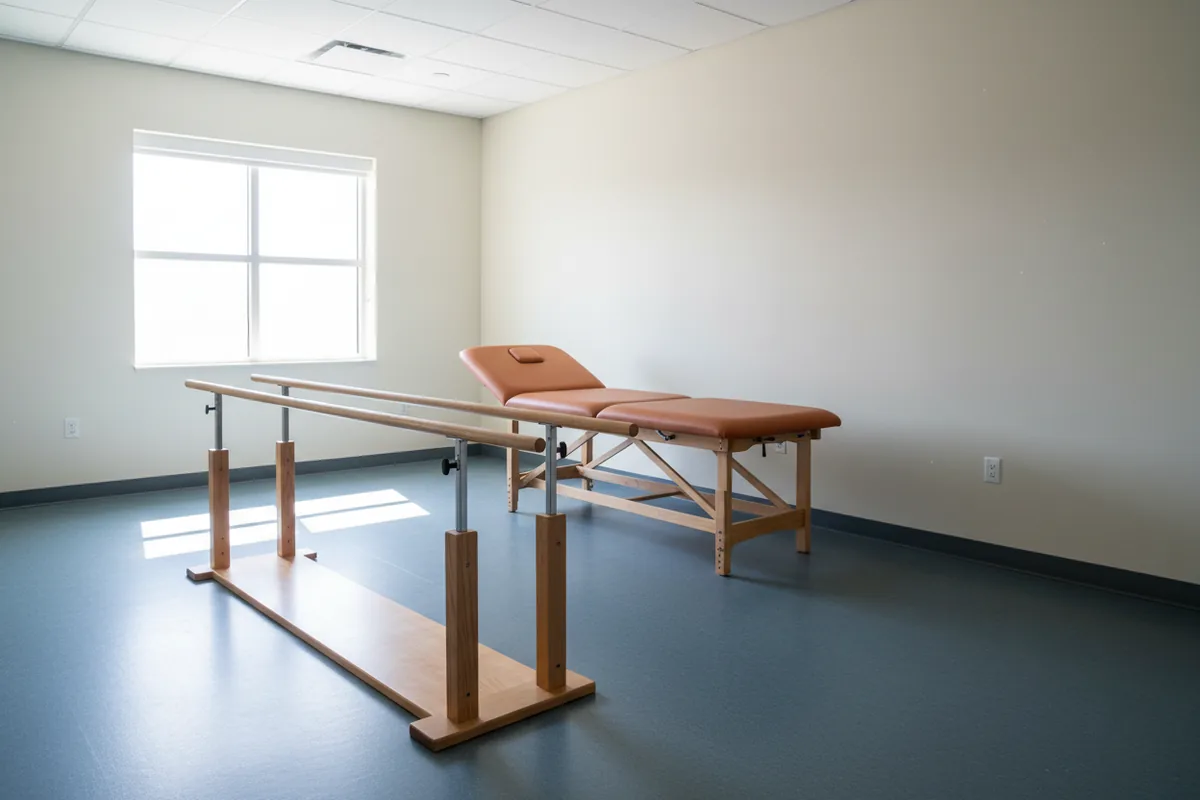
An empty rehabilitation room with therapy bars inside a skilled nursing facility.
Immediate answer

Neglect during a short rehab stay is judged by the same federal rules as a long nursing home stay. What 42 C.F.R. § 483.25 requires and what a claim must show.

On this page
  1. Does the Law Treat a Short Rehab Stay as Nursing Home Care?
  2. What Was the Facility Expected to Do During the Stay?
  3. Why the Type of Care Ordered Shapes the Question
  4. When a Fall, Wound or Decline Happens During Rehab
  5. What a Family Would Need to Show for a Neglect Claim
  6. Records That Help Reconstruct What Happened
  7. How State Deadlines and Rules Shape a Rehab Neglect Case
  8. Frequently asked questions
  9. Sources

Rehab facility neglect is a skilled nursing facility's failure to give a patient the care needed to avoid harm during a short recovery stay after a hospital discharge. The law does cover it. A short rehab stay in a certified skilled nursing facility falls under the same federal care rules as a long nursing home stay, and state law decides whether a legal claim exists.

Most people facing this question went into the rehab stay expecting a parent, a spouse or themselves to come out stronger, and instead came out with a fall, a wound, an infection or a sudden decline nobody explained. You may be wondering whether what happened was simply bad luck during a hard recovery, or whether the facility failed to do what it was supposed to do. This page explains the federal rules that apply to a short stay, how neglect differs from a poor outcome, what a claim has to show, and why state law shapes so much of the answer.

Does the Law Treat a Short Rehab Stay as Nursing Home Care?

Federal regulations define the term directly. Under 42 C.F.R. § 483.5, neglect is "the failure of the facility, its employees or service providers to provide goods and services to a resident that are necessary to avoid physical harm, pain, mental anguish, or emotional distress."

The same regulation defines a "facility" as "a skilled nursing facility (SNF) that meets the requirements of sections 1819(a), (b), (c), and (d) of the Act, or a nursing facility (NF)" that meets the parallel Medicaid requirements, and it can include a distinct part of a larger institution. The definition draws no line between a short stay and a long one. A patient sent from the hospital to a skilled nursing facility for a few weeks of therapy is a resident of a "facility" in the federal sense, and the same rules apply to that stay as to a resident who has lived there for years. For the broader picture, our guide to nursing home neglect covers how these rules work across all stays.

Medicare describes skilled nursing facility care as "nursing and therapy care that can only be safely and effectively performed by, or under the supervision of, professionals or technical personnel." Rehab patients are often medically fragile, recently out of surgery or a serious illness, and depending on trained staff for care they cannot give themselves.

Neglect is not the same thing as a poor outcome. Recovery after a hospital stay does not always go well, even with good care. The legal question is whether the facility failed to provide care the patient needed, and whether that failure caused harm. An injury alone does not answer either question; the facts, the patient's clinical condition and the records do.

For a family, this means a brief stay does not lower the protection the patient had. The question many families weigh first is whether the facility was a certified skilled nursing facility, and what care the patient needed to avoid the harm that happened.

What Was the Facility Expected to Do During the Stay?

The core rule is quality of care, and it sets the measure a family can hold the facility's conduct against. 42 C.F.R. § 483.25 states that "Quality of care is a fundamental principle that applies to all treatment and care provided to facility residents," and that, based on a resident's comprehensive assessment, the facility must ensure residents receive treatment and care "in accordance with professional standards of practice, the comprehensive person-centered care plan, and the resident's choices." The regulation lists specific areas, including the two below.

Paragraph (b) covers skin integrity. For pressure ulcers, the facility must ensure that a resident "receives care, consistent with professional standards of practice, to prevent pressure ulcers and does not develop pressure ulcers unless the individual's clinical condition demonstrates that they were unavoidable," and that a resident with pressure ulcers "receives necessary treatment and services, consistent with professional standards of practice, to promote healing, prevent infection and prevent new ulcers from developing." The same paragraph requires foot care and treatment in line with professional standards, and help with appointments and transportation where necessary.

Paragraph (d) covers accidents. The facility must ensure that "The resident environment remains as free of accident hazards as is possible" and that "Each resident receives adequate supervision and assistance devices to prevent accidents."

None of these duties shrink because a stay is expected to be short. If your family member developed a wound or fell, these are the duties the facility's care is compared with, and the assessment and care plan are where that comparison usually begins. Families often ask the facility for those documents, and an attorney can help sort out whether what was done matched what the rules and the plan called for. Medicare's nursing homes page also points families to information about care plans, residents' rights and how to report a problem in a nursing home. Our guide on how to report nursing home neglect explains who receives those reports.

Why the Type of Care Ordered Shapes the Question

What the facility was expected to do depends partly on the kind of care the patient was there to receive, and Medicare separates two kinds. Its nursing homes page explains that "Most nursing home care is custodial care, which helps people with activities of daily living (like bathing, dressing, and eating)," and that Original Medicare "may cover skilled care at a nursing home" for people who need short-term skilled care for an illness or injury and meet certain conditions.

Skilled care is what a rehab stay is built around. Medicare's skilled nursing facility page says Part A covers it "on a short-term basis" for eligible patients, and lists covered services including skilled nursing care, physical therapy, occupational therapy and speech-language pathology services when needed to meet a health goal, along with medications, meals, medical social services and dietary counseling. One condition it names is that a doctor or other health care provider has decided the patient needs daily skilled care, given "from, or under the supervision of, skilled nursing or therapy staff."

A patient admitted for daily wound care, IV medication or physical therapy after a hip surgery had specific, ordered needs. If those needs were documented and not met, the question of whether care fell below professional standards becomes more concrete. If the problem arose in ordinary custodial help, such as help getting to the bathroom, the same quality-of-care and accident rules still apply, but the facts that matter may look different.

A family may want to know exactly which services were ordered and when, since that is often where the standard of care for a particular patient begins.

When a Fall, Wound or Decline Happens During Rehab

The situations families describe after a rehab stay tend to fall into a handful of patterns. Each one can involve neglect, and each one can also happen without it.

Falls are the pattern most tied to a specific rule. A patient recovering from surgery may be unsteady, on new medications, or unable to stand alone. The accident standard in paragraph (d) asks whether the environment was as free of hazards as possible and whether the patient had adequate supervision and assistance devices. Whether a fall reflects a failure of either depends on what the patient's assessment showed and what staff did with it.

Pressure injuries, often called bedsores, can develop when a patient who cannot move well is not repositioned or checked. The federal rule itself recognizes that some pressure ulcers are unavoidable because of a resident's clinical condition, so a wound by itself does not prove neglect. Our page on bedsores in nursing homes explains that uncertainty in more depth.

Other patterns include a failure to notice and respond to a change in condition, such as signs of infection or confusion that were not passed on to a treating professional; medication errors, such as a missed or wrong dose; and therapy that was ordered but not provided. Some of these questions sit near the line between neglect and a clinician's judgment, which our page on malpractice versus neglect explains.

If one of these patterns fits what happened, it is a starting point rather than an answer. Families in this position often write down when the problem was first noticed, what staff said about it, and what the patient's risks were on arrival, since those details are what separate a hard recovery from a lapse in care.

What a Family Would Need to Show for a Neglect Claim

If you are considering whether a claim exists, it helps to know that a neglect claim against a skilled nursing facility generally rests on four elements, and each one must be shown:

  1. Duty — the legal obligation to provide care with reasonable skill. A facility that admits a rehab patient takes on a duty of care toward that patient.
  2. Breach — care that fell below the standard that applied. In this setting, the standard is shaped by professional standards of practice and by federal rules such as 42 C.F.R. § 483.25, though state law decides exactly how those rules are used in a lawsuit.
  3. Causation — the link between the breach and the harm: the failure must have caused or contributed to the injury, not merely come before it.
  4. Damages — the losses the harm produced.

Causation is often where these cases turn. A patient recovering from a serious illness may decline for reasons that have nothing to do with the facility, and separating the effect of a lapse in care from the effect of the underlying condition usually involves the medical records and professional opinion about the standard of care.

States differ on how these elements apply. Many states use comparative fault, which reduces or reshapes recovery based on each party's share of responsibility, while a few use contributory fault, which can bar recovery when the injured person bears any share of the blame. Damages rules also differ by state. The categories the law may allow can include medical expenses, pain and suffering and, after a death, a family's losses, as our guide to damages in neglect cases describes.

For a family, the practical point is that an injury is only one piece. The questions worth weighing are what the patient's records show about breach and causation, and a conversation with an attorney can help sort out whether each element may be met under the state's rules.

Records That Help Reconstruct What Happened

Records are how a facility's care gets reconstructed after the fact, because the patient may not remember what happened and the family usually was not there around the clock. If your family member was hurt during a rehab stay, the records that usually matter include the medical and nursing records, the therapy logs showing which sessions took place, incident reports about a fall or injury, the medication administration records showing what was given and when, and staffing records showing who was on duty.

The admission assessment and the care plan carry particular weight. Paragraph (b) and paragraph (d) both tie the facility's duties to the resident's comprehensive assessment, so what the facility recorded about the patient's risks on arrival is often the starting point for comparing what was planned with what was done.

Families often also keep their own notes, photos taken during visits, and the names of staff members or other visitors who saw what happened. Discharge papers and records from the hospital where the patient was readmitted, if that happened, can show the patient's condition when the stay ended. Any inspection findings about the facility may also become part of the picture, though a finding about a facility in general does not establish what happened to one patient.

How State Deadlines and Rules Shape a Rehab Neglect Case

Every state sets a deadline. A statute of limitations is the law that limits how long a person has to file a lawsuit, and when it runs out, a claim can be barred no matter how strong the facts are. Each state writes its own, decides when the period starts to run, and sets its own exceptions, so no single deadline applies across the country.

Some states also have specific rules for claims against health care providers or nursing facilities, which can add steps before a lawsuit is filed or set a different period. Whether a rehab facility claim falls under those rules depends on the state and on how the claim is framed.

When a patient dies, the family may bring a wrongful death claim, a claim by certain family members or the estate for losses caused by a death that resulted from someone else's wrongful conduct. Wrongful death claims often carry their own limitation periods, which can differ from those for an injury claim, and they may start running from a different date. Our guide to the nursing home statute of limitations explains how these deadlines are structured.

Because the start date and the exceptions depend on the state and the facts, families often have questions about which deadline governs their situation. If you would like to talk through which rules may apply to what happened during the rehab stay, you can request a case evaluation.

Free case evaluation

No Fee Unless We Win Your Case

A free case evaluation is how it starts. Tell us what happened, and we’ll help you understand your options. You pay no fee unless we win your case.

Nursing Home Abuse Advocates

How it works

  1. Call us or request a free case evaluationTell us what happened, in your own words.
  2. Talk through your caseYour options, and what your case may be worth.
  3. No fee unless we winYou pay no attorney fee unless we win your case.
Free case evaluation

Tell Us What Happened

Frequently asked questions

Can you sue a drug rehab or skilled nursing rehab facility for neglect?

A claim against a skilled nursing facility for neglect during a rehab stay is possible when duty, breach, causation and damages can be shown. The same federal care standards apply to a short rehabilitation stay as to a long nursing home stay. This page covers skilled nursing rehab; whether a particular situation supports a claim depends on the facts and the state's law.

What are common signs of neglect in a rehab or skilled nursing facility?

Families often notice unexplained falls or injuries, bedsores, a sudden change in condition that seemed to go unaddressed, missed therapy sessions or medication mistakes. None of these by itself proves neglect. Some injuries happen despite good care, and the patient's clinical condition and the records decide whether care fell short.

Is it hard to prove neglect in a nursing home or rehab facility?

Proving neglect means showing each element: duty, breach, causation and damages. That usually involves the medical records, professional opinion about the standard of care, and documentation of what the facility did and did not do. How difficult it is depends on the facts and the state's rules.

Do the same federal rules apply to a short rehab stay as to a long-term nursing home stay?

Yes. 42 C.F.R. § 483.5 defines "facility" to include a skilled nursing facility, with no distinction based on length of stay, and the quality-of-care standards in 42 C.F.R. § 483.25 apply to the care given to all facility residents.

What records typically matter in a rehab facility neglect case?

The records that usually matter include medical and nursing records, therapy logs, incident reports, medication administration records, staffing records, the admission assessment and the care plan. Families' own notes and photos from visits, and hospital records from any readmission, can also help show what happened.

How do state laws differ in rehab facility neglect cases?

State law sets limitation periods, fault rules such as comparative or contributory fault, and damages rules. No single state's rule applies everywhere. Some states also have specific requirements for claims against health care providers or nursing facilities, and wrongful death claims may follow different deadlines.

Does a bedsore or fall automatically mean a facility was negligent?

No. The federal pressure ulcer rule itself recognizes that some ulcers are unavoidable given a resident's clinical condition. Whether a facility breached its duty depends on what it did or failed to do, the patient's condition and assessment, and whether that failure caused the harm.

Sources

Statutes, regulations and court sources

  1. 0142 C.F.R. § 483.5, Definitions (eCFR) · Electronic Code of Federal Regulations
  2. 0242 C.F.R. § 483.25, Quality of care (eCFR) · Electronic Code of Federal Regulations

Other sources

  1. 03Skilled nursing facility care (Medicare.gov, Centers for Medicare & Medicaid Services) · medicare.gov
  2. 04Nursing Homes (Medicare.gov, Centers for Medicare & Medicaid Services) · medicare.gov