Skip to content

Sepsis in Nursing Home Residents: What It Is and When It May Point to a Care Failure

National · laws differ by state · Updated November 11, 2026

Information only — not legal or medical advice

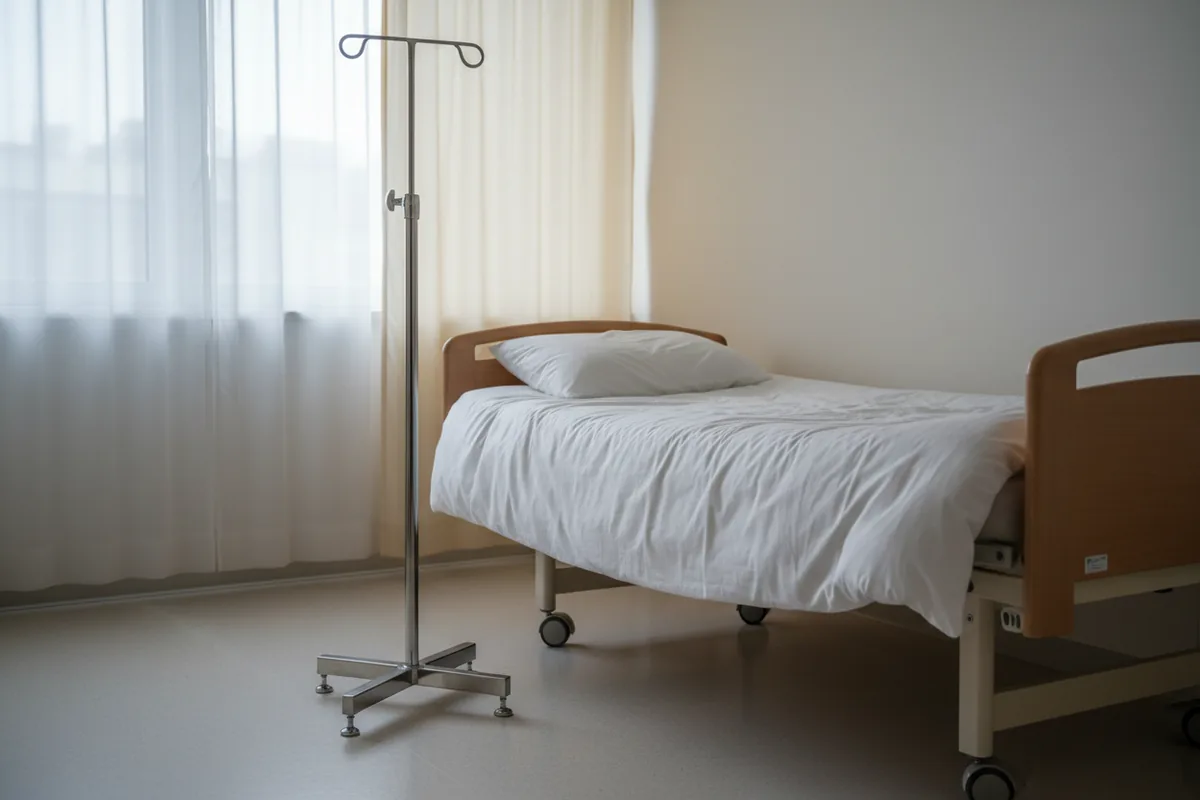
An empty IV pole beside an unoccupied nursing home bed where infection complications can arise.
Immediate answer

Sepsis is the body's extreme response to an infection. Learn which infections lead to it, the two federal care rules that apply, and why sepsis alone proves nothing.

On this page
  1. What the Word "Sepsis" Means for a Loved One
  2. How an Infection in a Nursing Home Can Become Sepsis
  3. What Federal Rules Require of the Facility
  4. What Families Often Notice — and What the Records May Show
  5. When Sepsis May Point to a Care Failure — and When It May Not
  6. Questions Worth Asking Before Deciding on Next Steps
  7. Frequently asked questions
  8. Sources

If a loved one in a nursing home developed sepsis, the short answer is this: sepsis is the body's extreme reaction to an infection, and it is a medical emergency. It can start from pneumonia, a bladder or kidney infection, or an infected wound or bedsore. Sepsis alone does not prove neglect, but the care record can show whether infection rules were followed.

Most people facing this are standing in a hospital hallway, or sitting with paperwork after a funeral, asking one question over and over: could this have been caught sooner? You may have been told your parent or spouse had "an infection" for days before anyone mentioned sepsis. You may have seen a wound you never knew existed. This page explains what sepsis is, how it tends to begin in long-term care, what federal rules ask of nursing homes, and how the law separates an illness that could not be prevented from a care failure.

What the Word "Sepsis" Means for a Loved One

Sepsis is, in the words of the U.S. National Library of Medicine's MedlinePlus page on sepsis, "your body's overactive and extreme response to an infection." The same page calls it "a life-threatening medical emergency" and says that without quick treatment it "can lead to tissue damage, organ failure, and even death."

Sepsis is not an infection by itself. It is what happens when an infection a person already has "triggers a chain reaction throughout your body," as MedlinePlus puts it. Bacterial infections are the most common cause, though other kinds can cause it too. MedlinePlus says the infections are often in the lungs, stomach, kidneys or bladder, and that sepsis can begin "with a small cut that gets infected" or with an infection after surgery. Sometimes it occurs in people who did not know they had an infection at all.

If you have seen the word septicemia in hospital records or on a death certificate, it is a term often used for an infection that has reached the bloodstream. The two words are not always used the same way, so the treating records are where their meaning in a particular case is set out.

MedlinePlus names who is more likely to develop sepsis, including adults 65 or older, people with chronic conditions such as diabetes, lung disease, cancer and kidney disease, and people with weakened immune systems. Many nursing home residents fall into more than one of those groups at once. For a family, this cuts both ways: a resident's health may explain why sepsis developed, yet that same vulnerability is why what the facility noticed, and when, matters so much afterward.

How an Infection in a Nursing Home Can Become Sepsis

Four kinds of infection come up again and again when a resident develops sepsis, and each connects to one of the sites MedlinePlus names.

Pneumonia is an infection of the lungs. For a resident who is frail, bedbound or has trouble swallowing, a lung infection can begin quietly and worsen. Because MedlinePlus lists the lungs as a common starting point, pneumonia is one recognized path to sepsis.

Urinary tract infections, or UTIs, involve the bladder and sometimes the kidneys, both of which MedlinePlus names. Older adults, residents with catheters and residents who need help with toileting are often discussed in connection with these infections.

A pressure ulcer is a wound caused by steady pressure on the skin, usually over a bony area like the tailbone, hip or heel, when a person stays in one position too long. Families often call them bedsores; federal rules call them pressure ulcers, and clinicians also say pressure injuries. An open pressure ulcer is a break in the skin, and MedlinePlus explains that sepsis can begin with an infected break as small as a cut. A deep or neglected wound is a much larger opening.

Wound infections from surgical sites or skin tears round out the list. A resident recovering from hip surgery, for example, may come to a facility with an incision that needs watching.

Naming the infection is only a starting point. MedlinePlus notes that many signs of sepsis can also be caused by other conditions, which "may make sepsis hard to diagnose in its early stages," and residents can develop serious infections even when staff are attentive. What separates the two is the timeline, not the diagnosis.

What Federal Rules Require of the Facility

Two federal regulations speak most directly to sepsis. Both are part of the federal requirements that apply to nursing homes certified to take part in Medicare and Medicaid, and the Centers for Medicare & Medicaid Services (CMS) is the federal agency that enforces them. The broader framework is explained in our guide to federal nursing home regulations.

The first is 42 C.F.R. § 483.80. It says the facility "must establish and maintain an infection prevention and control program designed to provide a safe, sanitary, and comfortable environment and to help prevent the development and transmission of communicable diseases and infections." In practical terms, paragraph (a) means a facility caring for your loved one is expected to have, at a minimum:

  • a system for "preventing, identifying, reporting, investigating, and controlling infections and communicable diseases";
  • written standards, policies and procedures;
  • an antibiotic stewardship program that includes antibiotic use protocols and a system to monitor antibiotic use;
  • a system for recording incidents and the corrective actions the facility took.

The written procedures must include, among other things, surveillance to identify possible infections before they spread, when and to whom possible infections are reported, standard and transmission-based precautions, when and how isolation is used, when staff with a communicable disease or infected skin lesions must be kept from direct resident contact, and hand hygiene procedures. More on how these programs break down appears in our article on nursing home infection control failures.

The second is 42 C.F.R. § 483.25, the quality-of-care rule. Paragraph (b) covers skin integrity. Based on the resident's assessment, the facility must ensure that a resident receives care, consistent with professional standards of practice, to prevent pressure ulcers and does not develop them unless the resident's clinical condition shows they were unavoidable. And it must ensure that "a resident with pressure ulcers receives necessary treatment and services, consistent with professional standards of practice, to promote healing, prevent infection and prevent new ulcers from developing."

For a family, these rules matter because they describe what the facility was expected to be doing before the hospital transfer, and because the required infection log and wound records may be where those answers sit. The pressure ulcer rule also carries a built-in exception: it recognizes that some ulcers are unavoidable. Facility inspection and citation records are publicly available, and families sometimes look at them for context. A citation, though, is not a finding about a particular resident, and a violation of these rules does not by itself prove negligence or show that a family has a claim.

What Families Often Notice — and What the Records May Show

Families are often the first to sense that something changed. A parent who suddenly seems confused, breathes fast, runs a fever or feels cold and clammy is showing some of the signs MedlinePlus lists for sepsis. Many relatives later remember a visit where something seemed off and wonder whether staff saw it too.

The answer usually lives in the paperwork. If your loved one was hurt, the records that usually matter include:

  • the resident's medical chart, including physician orders and the care plan;
  • nursing notes and vital-sign records, which show temperature, blood pressure, heart rate and breathing over time;
  • wound-care logs and skin assessments, which can show when a pressure ulcer first appeared, how it was staged and how it was treated;
  • infection-control records, including the facility's own log of infections and corrective actions that 42 C.F.R. § 483.80(a) requires it to keep;
  • incident reports and any other facility documentation of the infection or the wound;
  • hospital records from the transfer, which often describe the infection's source and how far it had progressed.

Sepsis is a story told in time. The questions turn on when the first sign of infection was charted, when a doctor was told, when treatment began, and whether the wound or infection was getting better or worse in the days before. A gap in the notes, or a change in condition with no recorded response, can be significant. So can a record showing that staff noticed, reported and treated an infection promptly.

Records do not interpret themselves, and they do not prove fault on their own. What they show, and how they measure against the federal standards and the professional standards of practice those rules refer to, is something a conversation with our attorney can help clarify. Our page on how to get nursing home medical records explains more about neglect cases and the documentation behind them.

When Sepsis May Point to a Care Failure — and When It May Not

When a family asks whether a facility is responsible, the law usually frames that as a negligence claim, which turns on four questions. Did the nursing home owe a duty of care, the obligation to provide reasonable care to its residents, shaped in part by the federal rules above? Was there a breach, meaning the facility fell short of that duty, for example by not following its infection-control procedures or not treating a pressure ulcer as the professional standard required? Is there causation, meaning the breach actually led to the harm, not that the harm would have happened anyway? And what are the damages, the losses that resulted, such as medical expenses, pain and suffering, and, after a death, the losses a wrongful-death law may allow?

Each of the four has to be shown, and each depends on the facts. That is where sepsis cases become hard. A resident with diabetes, kidney disease and a weakened immune system may develop sepsis despite good care. A pressure ulcer may be one of the unavoidable ones the regulation itself contemplates. An infection may have been treated correctly and still overwhelmed a frail body. On the other hand, a wound that went unmeasured for weeks, a fever charted but never reported, or a resident left in one position for hours can tell a different story. The diagnosis shows only that an infection became severe; whether a care failure led there is a clinical and factual question.

State law governs these claims, and the rules differ from state to state. Limitation periods, which are the deadlines for filing a lawsuit, vary, as do the rules on when they start to run. Fault rules, damages rules and wrongful-death rules vary too, including who may bring a claim after a death. Some facilities also ask residents to sign arbitration agreements, and how those are treated differs as well. No single state's rule is the rule everywhere. When a resident has died, our guide to nursing home wrongful death explains how those claims generally work.

Questions Worth Asking Before Deciding on Next Steps

Grief and uncertainty can make it hard to know where to begin. Families in this position often find it helps to put their concerns into a few plain questions:

  • What does the care record show in the days and weeks before the hospital transfer?
  • Was the infection or wound documented when it first appeared, and was a physician told?
  • How quickly was treatment started, and did the chart record whether it was working?
  • Did the facility follow its own infection-control procedures, and does its incident log mention this resident?
  • Was there a pressure ulcer, and do the wound-care records show treatment aimed at preventing infection?
  • What does the hospital's record say about where the infection started?

These questions do not have quick answers, and some may never be fully settled. What is at stake is the link between what happened and the standards a facility is held to: the answers can show whether the illness ran a course no one could change, or whether the record suggests a gap in care. If you would like help working through the infection timeline and what the facility's records reflect, requesting a case evaluation with our attorney is one option.

A case evaluation is a conversation about what happened. It is not a commitment, it does not decide whether a claim exists, it does not promise a particular outcome, and it does not mean an attorney will take the case. It is a chance to talk through the facts, the records you have and what state law says about the options.

Free case evaluation

No Fee Unless We Win Your Case

A free case evaluation is how it starts. Tell us what happened, and we’ll help you understand your options. You pay no fee unless we win your case.

Nursing Home Abuse Advocates

How it works

  1. Call us or request a free case evaluationTell us what happened, in your own words.
  2. Talk through your caseYour options, and what your case may be worth.
  3. No fee unless we winYou pay no attorney fee unless we win your case.
Free case evaluation

Tell Us What Happened

Frequently asked questions

Can pneumonia cause sepsis?

Yes. Pneumonia is a lung infection, and MedlinePlus names the lungs as one of the common places where infections that lead to sepsis begin. Whether pneumonia-related sepsis in a nursing home reflects a care failure depends on the specific facts, including how the infection was noticed and treated and whether the facility followed its infection-control program.

What is septicemia?

If you have seen septicemia in a loved one's records, it is a term often used for an infection that has reached the bloodstream. Sepsis, by contrast, is the body's extreme response to an infection, as MedlinePlus describes it. Because the two words are not always used identically, the treating records show how they apply in a given case.

What are the diagnostic criteria for sepsis?

Diagnosis is a medical decision, not a legal one. MedlinePlus says a provider takes a medical history, does a physical exam including vital signs, will likely order lab tests for signs of infection or organ damage, and may order imaging such as an x-ray or CT scan. It adds that early sepsis can be hard to diagnose.

What federal standards govern infection prevention in nursing homes?

42 C.F.R. § 483.80(a) requires certified nursing homes to run an infection prevention and control program. It must include a system for preventing, identifying, reporting, investigating and controlling infections, written policies, antibiotic stewardship, and a system for recording incidents and corrective actions. CMS enforces these federal requirements.

Does a nursing home resident developing sepsis prove the facility was negligent?

No. Residents with chronic illness or weakened immunity can develop sepsis even with appropriate care. The answer depends on the duty owed, whether it was breached, whether that breach caused the harm, and the resulting damages, and the full record decides it.

What federal standard applies to pressure ulcer care in nursing homes?

42 C.F.R. § 483.25(b) requires care to prevent pressure ulcers unless the resident's condition made them unavoidable, and requires treatment for existing ulcers to promote healing, prevent infection and prevent new ones. Infected pressure ulcers are one path through which sepsis can develop.

How to prevent sepsis in a nursing home?

This page gives no medical advice. The regulatory framework is 42 C.F.R. § 483.80(a), the infection prevention and control program, and 42 C.F.R. § 483.25(b), pressure ulcer care. Those rules state what certified facilities must do; whether a facility met them in a particular case is a factual question.

What records typically matter when a family is trying to understand how a resident developed sepsis?

Medical charts, nursing notes, vital-sign records, wound-care logs, infection-control records, incident reports and hospital transfer records typically matter most. Together they show the timeline of the infection. What they mean under the applicable standards is something a conversation with our attorney can help clarify.

Sources

Statutes, regulations and court sources

  1. 0142 C.F.R. § 483.80 — Infection control (eCFR) · Electronic Code of Federal Regulations
  2. 0242 C.F.R. § 483.25 — Quality of care (eCFR) · Electronic Code of Federal Regulations

Other sources

  1. 03Sepsis — MedlinePlus, U.S. National Library of Medicine · medlineplus.gov