Skip to content

Nursing Home Understaffing: What It Is, How It Harms Residents, and What the Law Requires

National · laws differ by state · Updated November 10, 2026

Information only — not legal or medical advice

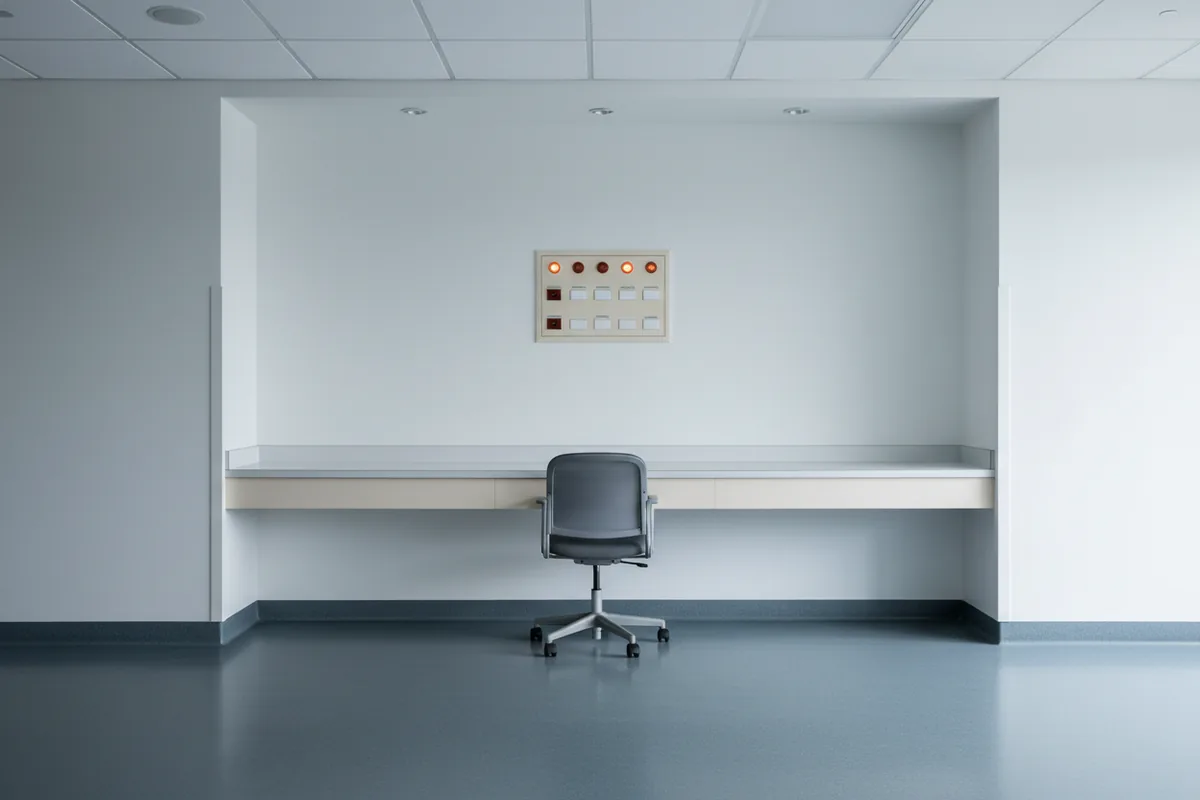
An unmanned nursing station with a call-light panel, where understaffing leaves residents without timely care.
Immediate answer

Federal law requires sufficient nursing staff around the clock, not a set ratio. Learn how missed care can harm residents and why an injury alone proves nothing.

On this page
  1. What "Enough Staff" Means Under Federal Law
  2. How Missed Care Can Lead to Harm
  3. Where Families Can Look for Staffing Information
  4. Why Staffing Records Matter When a Resident Is Hurt
  5. How State Law Decides Whether a Claim Exists
  6. Questions Families Often Bring to a Conversation With an Attorney
  7. Frequently asked questions
  8. Sources

Nursing home understaffing means a facility does not have enough nurses and aides, with the right skills, to meet each resident's needs. Federal rules require sufficient nursing staff around the clock, not a fixed ratio. When care is missed, residents can be harmed, but an injury alone does not prove that short staffing caused it.

Most people facing this question have seen something that worried them: a parent left in a wet bed, a meal tray untouched and cold, a call light blinking with no one coming, or a fall nobody saw. Some families are asking after a loved one has died. You may be trying to work out whether the facility simply did not have enough people on the floor, and whether that matters under the law. This page explains what the federal standard says, how missed care can lead to harm, how staffing is recorded, and how state law decides whether a claim exists.

What "Enough Staff" Means Under Federal Law

If your loved one lives in a nursing home that takes part in Medicare or Medicaid, the facility is held to a federal staffing rule, 42 C.F.R. § 483.35. In its words, the facility "must have sufficient nursing staff with the appropriate competencies and skills sets to provide nursing and related services to assure resident safety and attain or maintain the highest practicable physical, mental, and psychosocial well-being of each resident." The rule ties that judgment to resident assessments, individual care plans, and "the number, acuity and diagnoses of the facility's resident population," in line with a facility assessment the regulations require.

Under paragraph (a), the facility must provide services "by sufficient numbers" of licensed nurses and of other nursing personnel, including but not limited to nurse aides, "on a 24-hour basis to provide nursing care to all residents in accordance with resident care plans." It must also generally designate a licensed nurse to serve as charge nurse on each tour of duty, meaning each shift. The licensed-nurse and charge-nurse requirements apply except when waived under another paragraph of the same section.

The word that carries the weight is sufficient: enough people, with the right skills, to give each resident the care their assessment and care plan call for. The text sets no single number, so a staff level that is enough for one group of residents may fall short for a group with heavier needs. The regulation also says that providing care includes, but is not limited to, assessing, evaluating, planning and carrying out care plans, and "responding to resident's needs."

For a family, this means the question is not whether a facility hit a headcount, but whether someone came when your mother needed help. Because sufficiency turns on each resident's needs, a family weighing whether staffing fell short may start with what their loved one's care plan called for. The broader set of federal nursing home regulations frames this standard.

How Missed Care Can Lead to Harm

Missed care rarely looks dramatic at first. It often shows up as small things left undone, repeated over days or weeks, in residents who depend on staff for basic needs.

Residents who cannot change position on their own rely on staff to turn and reposition them. When those turns are missed, pressure on the skin can lead to pressure injuries, often called bedsores. Residents who need help eating or drinking rely on staff to bring meals and fluids and help them take them; when that help does not come, malnutrition and dehydration are recognized concerns.

Call lights exist so a resident can ask for help, to get to the bathroom, to get out of bed, or because something is wrong. A call light that goes unanswered can lead a resident to try to get up alone. Residents who are not watched can fall, and residents with memory loss can wander or leave the building. Our page on nursing home fall injuries covers the separate federal duty to supervise. When licensed nursing coverage is thin, medication can be given late, skipped or given in error.

These are the kinds of harm the staffing standard is meant to prevent. Still, the connection is not automatic. A frail resident can develop a pressure injury despite careful care, and a fall can happen even with good supervision; illness, medications and natural decline all play a part. Whether short staffing caused a particular resident's harm depends on that resident's condition, care plan and records. The wider subject of nursing home neglect is approached the same way.

If you have noticed one of these patterns, it can help to note what you saw, when, and whether it repeated. Those observations can later be compared with what the care plan required.

Where Families Can Look for Staffing Information

Families often start where Medicare points them. Medicare's guide to choosing a nursing home names three criteria for comparing quality: health inspection results, nursing home staffing, and quality measures. The same page describes visiting the facility, or having a family member or friend visit, as a way to understand the quality of care and life of the residents and to get answers from residents, families and staff.

That guide is written for someone choosing a home, but the same public comparison information can help a family looking back. If your loved one was hurt, you may be asking whether staffing was a known concern before the injury. Public information can give context, though it describes a facility as a whole and over time, not what happened to one resident on one shift.

Inside the facility, staffing leaves a paper trail of its own. Staffing schedules show who was assigned to work. Payroll records show who was paid for which hours. Nursing notes and care records show what care was charted for a resident and when. Read together, these records can show whether the people on a schedule were actually present and what they recorded doing.

What is at stake is the difference between a general impression and a specific answer: public figures may raise a concern, but the internal records are what can speak to your family member's care. If you would like to talk through what a facility's staffing information may mean, you can request a case evaluation and discuss it with our attorney.

Why Staffing Records Matter When a Resident Is Hurt

When a resident has been hurt or has died, the family's question usually narrows: who was working that day, and was it enough? Staffing records are among the few documents that can speak to that question for specific dates.

Records of who worked, in what roles and on which shifts can be set beside the regulation's requirement of sufficient licensed nurses and other nursing personnel on a 24-hour basis, and a charge nurse on each tour of duty. That comparison can bear on whether the facility met the standard.

Two things are easy to confuse here. A regulatory finding that a facility fell short of a federal requirement is not the same as a finding of civil liability, meaning legal responsibility to pay for harm in a lawsuit. A regulatory finding concerns compliance with program rules. A civil claim asks whether this facility's conduct caused this resident's injury, under state law. One can exist without the other, and a citation does not by itself prove negligence.

The records that usually matter include the resident's care plan, nursing notes, incident reports, staffing schedules and payroll records. Together they can show what care the plan called for, what was charted, and who was on duty when something happened. Even complete records leave open the medical question: a thin shift and an injury on the same night are a starting point, not a conclusion.

A family deciding what to do next may weigh which of these records they already have, which the facility holds, and which dates matter most, such as the day of a fall or the weeks before a pressure injury was found.

How State Law Decides Whether a Claim Exists

Claims about understaffing are usually brought as negligence claims under state law. Negligence is a failure to use the care the law requires. For a family, a negligence claim generally comes down to four questions: what obligation the facility owed your loved one (duty), whether it fell short of that obligation (breach), whether that shortfall actually led to the harm (causation), and what losses the harm caused (damages). All four have to be shown; a breach alone is not enough.

The federal staffing standard in 42 C.F.R. § 483.35(a) can be relevant to the duty and breach questions, because it describes what a certified facility is required to provide. State law, though, governs the civil claim itself: what must be proved, who may bring it, and what may be recovered. How much weight a court gives a federal standard is also a question of state law.

Where the facility is located can change what is possible for your family. A statute of limitations is the deadline by which a lawsuit must be filed, and the length of that period, when it starts to run and its exceptions vary from state to state. Fault rules also vary. Under comparative fault, a person's recovery may be reduced by their own share of fault; under contributory fault, used in a smaller number of places, any fault on the injured person's part can bar recovery. Damages rules, including limits some states place on certain damages, also differ. No single state's rule applies everywhere, and the law of the state where the facility is located usually matters most.

Wrongful death is a separate claim, created by state law, that may be brought when a person's death results from another's wrongful act or negligence. Who may bring it and what it may cover differ by state. Our page on nursing home wrongful death explains that claim in more detail.

Depending on the state, the law may allow damages categories such as medical expenses and pain and suffering, and, in a wrongful-death case, losses to the family such as loss of companionship. Because deadlines and rules turn on location, the state where the facility sits is often one of the first facts a family may want to confirm.

Questions Families Often Bring to a Conversation With an Attorney

A family in this position is usually trying to answer two things at once: was what happened to their loved one preventable, and does the law offer any path forward? Neither has a quick answer, and it is normal to arrive with more questions than facts. What is at stake is not only a possible claim but an understanding of what happened, which often depends on records the family has not yet seen.

Families often think about when they first noticed missed care, what they saw on visits, whether they raised concerns with staff and what they were told, and what happened on the day of an injury or decline. They may wonder whether a care plan existed for the specific need involved, such as turning, eating help or fall supervision, and what the facility reported afterward.

A conversation with our attorney can cover the federal staffing standard and how it applies to a certified facility, what the facility's public comparison information shows, the resident's care documentation, the limitation period in the state where the facility is located, and the elements a negligence or wrongful-death claim would need to show. It can help a family sort out which of their questions turn on records they have not yet seen.

A conversation does not promise any outcome. Whether a claim exists depends on the facts, the records and the law of the state involved.

Free case evaluation

No Fee Unless We Win Your Case

A free case evaluation is how it starts. Tell us what happened, and we’ll help you understand your options. You pay no fee unless we win your case.

Nursing Home Abuse Advocates

How it works

  1. Call us or request a free case evaluationTell us what happened, in your own words.
  2. Talk through your caseYour options, and what your case may be worth.
  3. No fee unless we winYou pay no attorney fee unless we win your case.
Free case evaluation

Tell Us What Happened

Frequently asked questions

What does federal law require nursing homes to provide in terms of staffing?

Under 42 C.F.R. § 483.35(a), a certified facility must have sufficient nursing staff with the appropriate competencies and skill sets, provide services by sufficient numbers of licensed nurses and other nursing personnel on a 24-hour basis, and generally designate a licensed nurse as charge nurse on each tour of duty. The text sets no fixed ratio; sufficiency is tied to residents' assessed needs.

How can I find out whether a nursing home is understaffed?

Medicare's guide to choosing a nursing home lists nursing home staffing as one criterion for comparing facilities, along with health inspection results and quality measures. It also describes visiting a facility to understand the quality of care and talk with residents, families and staff. Public information describes a facility generally, not one resident's care.

Does a staffing violation mean the nursing home is legally liable for my family member's injury?

No, not by itself. A regulatory finding is not a finding of civil liability. A negligence claim under state law requires duty, breach, causation and damages, and whether those elements are met depends on the specific facts of the resident's care.

What kinds of harm are associated with nursing home understaffing?

Missed repositioning is linked to pressure injuries, missed meals and fluids to malnutrition and dehydration, unanswered calls and lack of supervision to falls and wandering, and thin nursing coverage to medication errors. Illness and decline can also play a part, so the cause of a given injury depends on the resident's records.

How do states differ in nursing home neglect claims?

Statutes of limitations, fault rules such as comparative or contributory fault, and damages rules all vary by state. No single state's rule applies everywhere. The law of the state where the facility is located usually shapes what a family's options are.

What is a wrongful death claim in the context of nursing home understaffing?

It is a separate claim, created by state law, that may be brought when a death results from another's wrongful act or negligence. Who may bring it and which damages categories it covers differ by state, and whether a claim exists depends on the facts.

What records are often relevant in a nursing home understaffing case?

The records that often matter include the resident's care plan, nursing notes, incident reports, staffing schedules and payroll records. Together they can show what care was planned, what was charted and who was on duty at a given time.

Sources

Statutes, regulations and court sources

  1. 0142 C.F.R. § 483.35 — Nursing services (eCFR) · Electronic Code of Federal Regulations

Other sources

  1. 02How do I choose a nursing home? (Medicare.gov, Centers for Medicare & Medicaid Services) · medicare.gov