Skip to content

Nursing Home Wandering and Elopement: What Families Need to Know

National · laws differ by state · Updated November 10, 2026

Information only — not legal or medical advice

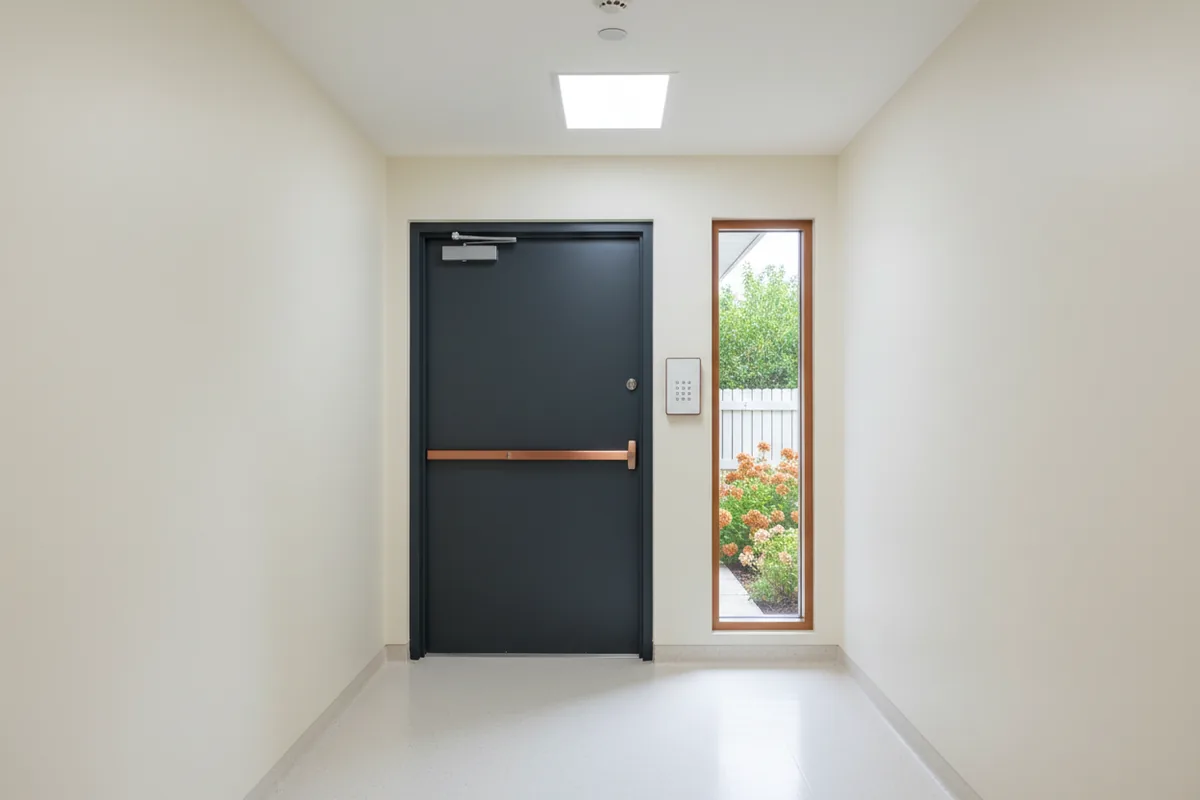
A keypaded exit door in a nursing home corridor helps prevent resident elopement.
Immediate answer

Wandering and elopement explained: the federal supervision and care-plan rules for nursing homes, the records that matter, and why leaving alone proves nothing.

On this page
  1. If Your Loved One Wandered or Eloped: What the Terms Mean in a Nursing Home
  2. What Federal Rules Expected the Nursing Home to Do About Supervision and Care Planning
  3. What a Facility's Care Plan Should Address for a Resident at Risk
  4. What Families Often Gather After a Wandering or Elopement Incident
  5. Does Leaving the Building Mean the Facility Was at Fault? Why the Legal Question Is More Than Whether the Resident Left
  6. Frequently asked questions
  7. Sources

Wandering is when a nursing home resident moves around the building aimlessly or repeatedly. Elopement is when a resident leaves the facility without anyone noticing. Federal rules require a certified nursing home to give each resident adequate supervision to prevent accidents and to plan care around that resident's assessed risks. A resident leaving does not, by itself, prove neglect.

Most people facing this question are living with a phone call they never expected: a parent with dementia found outside, in a parking lot or down a road, sometimes hurt, sometimes worse. Others have watched a loved one pace the halls and try the doors, and they wonder whether anyone at the facility sees what they see. In both cases the questions are the same. What was the nursing home supposed to be doing, and how would a family know whether it did? This page walks through the federal rules, the records that show what a facility knew and planned, and how the legal question is actually framed.

If Your Loved One Wandered or Eloped: What the Terms Mean in a Nursing Home

These are two different events, even though people often use the words together.

Wandering means movement within the facility that may be repetitive or without a clear goal. A resident might walk the same hallway again and again, go into other residents' rooms, or drift toward an exit. The resident is still inside the building, inside the setting the facility controls.

Elopement means a resident leaving the facility unnoticed or without authorization. This is the higher-risk event. Once a resident is outside, the protections of the building are gone. That can mean traffic, weather, stairs, water or simply no one nearby to help.

The concern centers on residents living with dementia, Alzheimer's disease or other cognitive impairment. Memory loss can affect a person's sense of where they are, whether they are safe, and how to get back. A resident may believe they need to go to work, pick up a child or go home. The National Institute on Aging notes that some facilities offer special programs for people with Alzheimer's disease and other types of dementia, which reflects how distinct those residents' needs can be.

The difference matters because it shapes what supervision a facility is expected to provide. A resident who wanders inside the building presents one kind of risk. A resident who has tried the exits, or who has gotten out before, presents another. For a family, a useful starting point is to recall which pattern a loved one showed, and whether earlier episodes, such as pacing near doors or a prior exit, were ever mentioned to or by staff. That history is usually where the questions about the facility begin.

What Federal Rules Expected the Nursing Home to Do About Supervision and Care Planning

Two federal regulations do most of the work here. They apply to nursing homes certified to take part in Medicare and Medicaid, which must meet the requirements in Part 483 of Title 42 of the Code of Federal Regulations. Our overview of federal nursing home regulations explains that framework more broadly.

The first is the accident rule. Under 42 C.F.R. § 483.25, paragraph (d), titled "Accidents," the facility must ensure that:

"(1) The resident environment remains as free of accident hazards as is possible; and (2) Each resident receives adequate supervision and assistance devices to prevent accidents."

The same section opens with a broader principle: based on the comprehensive assessment of a resident, the facility must ensure that residents receive treatment and care "in accordance with professional standards of practice, the comprehensive person-centered care plan, and the resident's choices."

The second is the care-planning rule. Under 42 C.F.R. § 483.21, paragraph (b), the facility must "develop and implement a comprehensive person-centered care plan for each resident" that includes "measurable objectives and timeframes to meet a resident's medical, nursing, and mental and psychosocial needs that are identified in the comprehensive assessment."

A comprehensive person-centered care plan is the written plan a facility builds for one specific resident, based on that resident's own assessment, needs and goals. It is not a form shared by everyone on the unit.

Read together, the two rules form a chain. The assessment identifies the resident's needs and risks. The care plan says how the facility will meet them. The supervision standard asks the facility to follow through. If an assessment shows that a resident with dementia tries to leave, the care plan is meant to address that need, and the supervision rule asks that the resident actually receive adequate supervision.

Neither regulation lists specific door alarms, locks or staffing levels. The standard is "adequate" supervision, measured against the individual resident. That word leaves room for argument, which is why the facts of each resident's history matter so much. For a family, the chain suggests three questions to weigh: did the assessment identify the risk, did the plan respond to it, and was the plan followed?

Federal rules are a floor, not the whole picture. State law may add its own licensing and care requirements for nursing homes, and those rules differ by state.

What a Facility's Care Plan Should Address for a Resident at Risk

When a family asks what the nursing home was supposed to be doing for their mother or father, the care plan is usually the clearest written answer.

Under 42 C.F.R. § 483.21(b), the care plan must describe "the services that are to be furnished to attain or maintain the resident's highest practicable physical, mental, and psychosocial well-being." It must also be shaped, in consultation with the resident and the resident's representative, around the resident's goals for admission and desired outcomes. For a family reviewing a plan, the regulation's process rules offer a way to check whether it was made and kept current:

  • Timing. It must be developed within 7 days after completion of the comprehensive assessment.
  • Who was at the table. It must be prepared by an interdisciplinary team. That team includes, but is not limited to, the attending physician, a registered nurse and a nurse aide with responsibility for the resident, and a member of food and nutrition services staff. It also includes the resident and representative to the extent practicable, and other appropriate staff as the resident's needs require. In practice, that means the people who saw the resident daily were meant to contribute.
  • Updates. It must be reviewed and revised by that team after each assessment, including both the comprehensive and quarterly review assessments. A plan that never changed after a resident's behavior changed may raise questions.
  • Quality of the services. The services it outlines must meet professional standards of quality and be culturally competent and trauma-informed. They must also be provided by qualified persons in accordance with the resident's written plan of care, so who actually carried out the plan can matter as much as what it said.

The regulation also says that when the resident's and representative's participation is determined not practicable, an explanation must be included in the medical record. That detail can show whether anyone was asked to share what a family knew about a loved one's habits and history.

Because the plan is individualized, two residents on the same hall may have very different plans. A resident with advancing dementia who has tried the doors is in a different position from a resident who walks the halls but has never approached an exit.

The setting can matter too. The National Institute on Aging describes nursing homes as offering services that typically include "24-hour supervision." A dementia program or unit may have additional supervision structures in place, though what exists varies from one facility to the next.

The care plan records both the facility's understanding of the risk and its commitments in response. Families often look at whether the plan matched their loved one, whether it was revised after earlier episodes, and whether they were included in making it. Gaps between the plan and what happened on the day a resident left are often what an attorney can help a family examine. State rules may add care-planning requirements beyond the federal standard, and those differ by state.

What Families Often Gather After a Wandering or Elopement Incident

If your loved one walked out of a facility, the hours afterward are often a blur of hospital rooms and questions nobody answers clearly. Later, many families turn to the paper trail.

The records that usually matter include:

  • The resident's assessments and care plan, which show what the facility identified about the resident's risk and what services it planned in response, including whether the plan was revised after earlier episodes.
  • The facility's incident reports, which describe how the facility itself recorded the event: when the resident was last seen, when the absence was noticed, and what staff did.
  • Staffing records for the shift, which bear on whether supervision was available as planned. A plan that calls for close watching depends on people being there to do it.
  • Inspection and survey records. The National Institute on Aging points to Medicare's Care Compare tool as a way to find and compare nursing homes, and inspection findings about a facility's supervision practices can add context.
  • Any surveillance footage of hallways and exits, along with nursing notes and the medical records from treatment afterward.

Each record answers a different part of the same question. The incident report and footage speak to what happened. Staffing records speak to whether the plan could be carried out. Some of these records sit with the facility and some with government agencies, and residents and their representatives have rights to request a resident's records. Our guide to nursing home neglect explains more about how these records fit into the wider care duties a facility owes.

No single record proves what happened. An incident report is the facility's own account. A care plan shows intent, not performance. What the records mean usually becomes clear only when they are read side by side.

Does Leaving the Building Mean the Facility Was at Fault? Why the Legal Question Is More Than Whether the Resident Left

A resident getting out of a building is a fact. Whether the facility is legally responsible is a separate question with several parts.

Most claims against a nursing home over an injury rest on negligence, a failure to use the care the law expects. For a family, negligence comes down to four questions. What did the facility owe this resident (duty)? Did its supervision or care planning fall short of that (breach)? Did that shortfall contribute to the harm (causation)? And what losses may the law recognize (damages)? The federal rules above help describe the duty. Whether the other elements are met depends entirely on the facts.

That is why an elopement does not, on its own, establish that a facility was negligent. A resident may leave despite a sound plan carried out carefully. A resident may also leave because a known risk was never planned for, or a plan was ignored. The same is true of the injuries that can follow, such as a fall or a fracture: an injury does not prove fault, and clinical questions about a resident's condition can be genuinely uncertain.

State law decides most of the rest. Limitation periods, the deadlines for filing a claim, differ by state, as do the rules on how fault is shared and which damages the law allows. Rules on who may bring a claim after a death also vary; our page on nursing home wrongful death covers that subject. Where a facility used restraints or locked areas, separate rules apply, discussed in our guide to physical restraints. No single national rule governs every case.

If you are trying to piece together what the care plan said, what supervision was in place and what happened in the minutes before your loved one was found, those facts are exactly what a conversation with our attorney can help a family begin to sort out. You can request a case evaluation to talk it through. Our page on nursing home neglect lawsuits explains how these cases are generally built.

Free case evaluation

No Fee Unless We Win Your Case

A free case evaluation is how it starts. Tell us what happened, and we’ll help you understand your options. You pay no fee unless we win your case.

Nursing Home Abuse Advocates

How it works

  1. Call us or request a free case evaluationTell us what happened, in your own words.
  2. Talk through your caseYour options, and what your case may be worth.
  3. No fee unless we winYou pay no attorney fee unless we win your case.
Free case evaluation

Tell Us What Happened

Frequently asked questions

What does it mean when a patient is an elopement risk?

It means the resident's condition, often dementia or another cognitive impairment, makes it possible they could leave the facility unnoticed and be unable to recognize danger or find their way back. Under 42 C.F.R. § 483.21(b), needs identified in a resident's comprehensive assessment are meant to be addressed in the care plan.

What is the difference between wandering and elopement in a nursing home?

Wandering is movement within the facility, often repetitive or without a clear goal. Elopement is a resident leaving the facility unnoticed or without authorization. The difference matters because elopement places the resident outside the facility's protective setting, and the supervision a resident needs depends on which risk they carry.

What federal rules require nursing homes to prevent wandering and elopement?

For certified nursing homes, 42 C.F.R. § 483.25(d) requires that each resident receive adequate supervision and assistance devices to prevent accidents. 42 C.F.R. § 483.21(b) requires a comprehensive person-centered care plan built from the resident's assessment. State law may add further requirements, and those differ by state.

What records matter after a nursing home elopement incident?

The records that usually matter include the resident's assessments and care plan, the facility's incident reports, staffing records for the shift, inspection and survey records, and any surveillance footage. Together they show what the facility knew about the risk, what it planned and what happened.

Does an elopement incident prove the nursing home was negligent?

No. A negligence claim asks about duty, breach, causation and damages, and whether each is met depends on the facts: what the facility knew about the resident's risk, what the care plan required, what supervision was in place, and whether any shortfall contributed to the harm. Fault rules differ by state.

Do limitation periods for nursing home elopement claims differ by state?

Yes. Limitation periods, the time within which a claim must be filed, differ by state, as do fault rules and damages rules. The applicable state's statute, as its text states it, governs when the period starts to run and what exceptions apply.

Sources

Statutes, regulations and court sources

  1. 0142 C.F.R. § 483.25 — Quality of care (eCFR) · Electronic Code of Federal Regulations
  2. 0242 C.F.R. § 483.21 — Comprehensive person-centered care planning (eCFR) · Electronic Code of Federal Regulations

Other sources

  1. 03Long-Term Care Facilities: Assisted Living, Nursing Homes, and Other Residential Care (National Institute on Aging) · nia.nih.gov